The Four Agreements (book review)

How did I hear about it?

I don’t know how The Four Agreements ended up on my reading list. I don’t mean that I don’t remember the sequence of steps I took to add it, I mean it seems impossible that such a book would be on my reading list. You see the full title of this book is The Four Agreements: Practical Guide to Personal Freedom (Toltec Wisdom Book) and it’s the Toltec Wisdom bit of the title that normally acts as a repellent. Toltec is an ancient Mesoamerican culture and if there’s one thing we know about wisdom from ancient cultures its that they’re notorious for being wrong. Yes, it’s true. Still the book was on my list so I assume I had a well researched reason for adding it. I started reading and the drill is simple, if I start reading a book then I have to complete it.

Now I’ve completed it and …?

I really enjoyed this book. I read it in one afternoon. It’s not very big but also Don Miguel Ruiz makes his points using simple, natural language without patronising the reader. The key point is that we live our lives based on agreements we’ve made with society. Unfortunately society’s primary goal is control and we didn’t have much of a say in the agreements as they have been drilled into us since we were children.

One such agreement, for example, is when as a child you’re singing and your parents tell you that you don’t sing well. After hearing this repeatedly you eventually stop singing because you have come to the agreement that you don’t have a good singing voice. It doesn’t matter that singing makes you happy, you would rather deny yourself that pleasure than break the agreement. Of course you can’t blame your parents because they too had the same agreements imposed on them.

According to “Toltec” wisdom (more on that later) all that matters is happiness and you only need four agreements with yourself to find happiness. These are 1) be impeccable with your word, 2) don’t make assumptions, 3) don’t take things personally and 4) always do your best. That’s it. Break the old agreements, adopt these new ones*, live happily ever after.

As for all this talk about Toltec wisdom it’s like calling your ice cream flavour Planifolia, it might attract hippies but ultimately it’s still just Vanilla.

* ignore the fact that this is someone else telling you to make these agreements

What are some sample quotes?

We train our children whom we love so much the same way that we train any domesticated animal: with a system of punishment and reward

Death is not the biggest fear we have; our biggest fear is taking the risk to be alive

The word is the most powerful tool you have as a human

Your opinion is nothing but your point of view. It is not necessarily true

Nothing other people do is because of you. It is because of themselves

Do not expect people to tell you the truth because they also lie to themselves

When we believe something, we assume we are right about it to the point that we will destroy relationships in order to defend our position

Was it worth the money?

As I stated earlier, I had reservations about reading this book but once I did read it I thought it was well worth the (admittedly quite small) effort. The four agreements speak for themselves and are pretty obvious but the surrounding narrative really helps to reinforce the point.

Verdict: Buy.
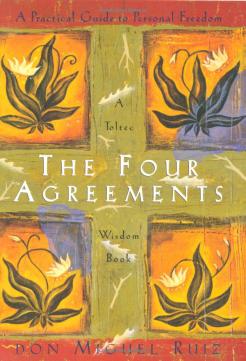
The four agreements (cover photo)

Eat That Frog (book review)

How did I hear about it?

A few years ago I decided that to be more productive I needed to procrastinate less. What better way to do so than to read a book about how to not procrastinate (rather than go do the things I was avoiding). From my research the consensus seemed to be that the 3 best choices were:
– Never check e-mail in the morning
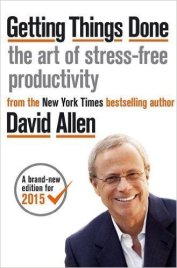
Getting things done
Eat that frog!

I figured not checking emails in the morning was something I could easily get on board with so I bought that book, read the first chapter and got distracted by all the emails I had that I needed to check in the morning. I blamed the book for my lack of increased productivity and so moved on to Getting things done, which I never did finish. As for Eat that frog, I simply forgot about it. Recently however, we started a library at work and while perusing the book shelves I came across Eat that frog and figured that I would give it a go.

Now I’ve completed it and …?

As far as time management goes, Eat that frog has some great advice. In addition, it has great structure and flow making it a very easy read. The focus is on identifying and tackling your most important task (your biggest, ugliest, wartiest frog) first and foremost. Everything else is secondary. Each chapter highlights an approach for doing this and ends with an action plan for applying the approach. And right there lies the problem with this book (and most other time management books to be fair).

Telling an accomplished procrastinator to go do that task right now is like telling Kim Jong-un to just be nice. Sure it’s obvious but it ain’t gonna happen. Reading a book is easy, it’s a one-off task. Making fundamental life changes, undoing years of degenerative behaviour and ultimately breaking bad habits? Not so easy. If it were, Brian Tracy wouldn’t be a best selling author, maybe he’d be a window cleaner or a fishmonger or something else, just not best selling author on productivity.

That said, even if I personally never get around to doing any of the actions, I still walked away with a profound message: prioritise aggressively, focus relentlessly. There are a few actions that you perform that give you significant returns. Most of the others only offer fleeting reward. Focus on the former, only ever do the latter if there’s nothing better to do. Also, find your most productive time and use it for the most important tasks. I’ve discovered that mine is 6:30 a.m.

What are some sample quotes?

The hardest part of any important task is getting started on it in the first place

Motivation requires motive

Do first things first and second things not at all

The starting point of high performance is for you to identify the key result areas of your work

Your ultimate goal is to live a long, happy and health life

Be prepared to fail over and over before you get it right

Read in your field for at least one hour every day

Was it worth the money?

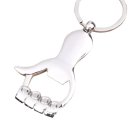
The Kindle edition of Eat that frog cost me £0.99 on Amazon which, at the time of writing, is actually 15p less than the palm-shaped bottle opener key ring. I already own a key ring and can open a bottle using every day items including a pen, I always have a pen. I managed to read this to completion (and learn something new) in the time that Amazon would have taken to deliver the useless bottle opening key ring.

Verdict: Buy.

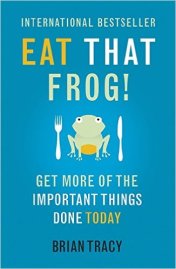
Eat that frog! cover photo Getting things done cover photo Never check e-mail in the morning cover photo Bottle opener key ring