The Coaching Habit (book review)

Why did I read this book?

I have a friend who I’ve known since high school and who I’ve always admired for his inner drive and relentless pursuit of his goals. He’s now vice chancellor of a university, author of a few books, hosts a talk show and has presented to many illustrious audiences including at the UN. One day he told me that he recently got a coach and it was the best career decision he has ever made. I went and got a coach.

After working with my coach I started to realize that my management focus had primarily been on improving performance, not developing performers. It wasn’t enough to coach, I too needed to start coaching. After a bit of research and asking around I was eventually led to The Coaching Habit.

Now I’ve completed it and …?

Michael Bungay Stanier starts by highlighting research that shows that the coaching style of leadership is proven to be one of the most effective at improving workplace performance and organisational culture. It has a demonstrably positive effect on the bottom line and yet it is one of the least used styles.

There are primarily two reasons for this. On the one hand, most people have no idea of the benefits of coaching and/or how to go about doing so. On the other hand, we’re programmed from a very early age to provide answers. Most of the rewards in society comes from providing the right answers, whether it be in school, work, games or our social circles. Our default position is to instruct, tell our staff what to do, instead of giving them the tools to formulate their own solutions. This is what coaching is about.

Given the dual nature of the problem, The coaching habit provides a dual track solution. One track focuses on how to form habits. This includes the essential components of forming effective habits as well as tools that can help in the process. The outcome of this track is a “new habit formula” to be used whenever faced with the default behaviour of giving answers.

The second track, which focuses on effective coaching, is distilled into 7 questions. 7 amazing questions. 7 beautiful questions. That’s it, 7 questions that will unlock the potential of your staff and finally transform you into an effective manager. Combined with the new habit formula anyone, in any situation, at any experience level can start applying the ‘technique’ which will ultimately evolve into a way of thinking. It’s too easy.

What are the questions?

I want to stay away from the specifics of the books I review as this blog is about the meaning I took away and I want the readers to try (or not) the book for themselves to find their own meaning. I’ll make an exception in this case. Here are the 7 questions.

What’s on your mind?

And what else?

What’s the real challenge here for you?

What do you want?

How can I help?

If you’re saying yes to this, what are you saying no to?

What was most useful for you?

And finally, not one of the questions but my new favourite phrase…

The answer to how is yes

Was it worth the money?

Remember that time when people thought the earth was flat* and stationery? I mean, it was obvious, we stand upright, our buildings – apart from that one in Pisa – stand upright, no one was suffering from dizziness. Of course the earth is flat! Then one day some guy rocks up and proves that not only was the earth not flat, it was ‘spherical’ and rotating. Imagine how those people must have felt. Well I don’t have to imagine because that’s how I felt after reading this. I would have easily paid 10 times the amount for this book having read it. Do you know what you else you could get for that kind of money? It doesn’t matter!

Verdict: Go buy this book now. Buy a few, for your boss, for your staff, for random strangers on the street.

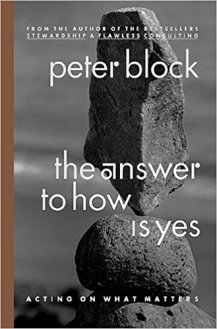
The coaching habit cover photo The answer to how is yes cover photo

*There are a few who still do

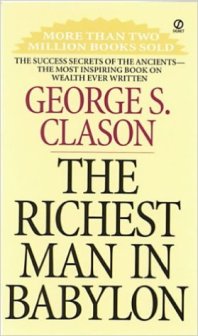
The Richest Man in Babylon (book review)

Why did I read this book?

In one way or another, a question about how to become excessively rich in the shortest possible time always pops up in my Quora feed. Usually the answers are dismissive but inevitably someone will quote a few passages from or outright recommend that the original poster read The Richest Man in Babylon.

To be fair I’ve always been sceptical about this man. If he was anything like the richest man in Egypt or the richest man in Tenochtitlan then slavery, brutality and subjugation probably played a large role in his success. Modern laws coupled with my moral compass would preclude me from following in his footsteps.

Still, I couldn’t get over the sheer volume of references to this book, some from really respectable sources, so I decided to give it a go.

Now I’ve completed it and …?

This book operates on the premise that there is a timelessness to the desire to create and manage wealth as well as the strategies and techniques to do so. Few have mastered this ability while the masses for the most part have only managed to master complaining about their lack of success. It delivers this message using the vehicle of a fable set in Babylon when it was at the peak of its fortunes.

The story begins with two labourers lamenting the fact that they were always broke even though they were good at their craft. (Sounds familiar?) They then decide to seek advice from a childhood friend who had grown up to become the titular richest man in Babylon. He welcomes his friends with open arms and proceeds to offer them the 7 cures to that most debilitating of diseases, “a lean purse.”

The message in the book is simple and clear. The ingredients to success are hard work, self discipline, being proactive and seeking advice from those that have already done the journey. Having wealth is different from having a wealth generating capability and it is the latter that the richest man in Babylon advises his friends (and by extension us) to focus on. Sure, some people get lucky, they inherit a fortune or the win the lottery or they find a sugar daddy or whatever but none of these are in our control and none are immune to being wiped away at any moment.  However, if we develop and follow a system that at its core builds wealth, then we can overcome most circumstances and in time will become wealthy ourselves. No shit.

What are some sample quotes?

Opportunity is a haughty goddess who wastes no time with those who are unprepared

Will power is but the unflinching purpose to carry a task you set for yourself to fulfillment

Preceding accomplishment must be desire. Thy desires must be strong and definite

We mortals are changeable. Alas, I must say more apt to change our minds when right than wrong

There is no chain of disasters that will not come to an end

The hungrier one becomes, the clearer one’s mind works

The soul of a free man looks at life as a series of problems to be solved and solves them

Was it worth the money?

I really want to say that this book didn’t teach me anything that I didn’t already know and so every penny spent on it plus every second spent reading it was a penny and a second wasted. For the 99p that the kindle edition cost me I could have got the inflatable parrot from amazon and taken my first step towards fulfilling my real dream of being a pirate.

The reality however is that this was one of the best books I’ve read. The message was hammered home in the most effective of ways and there was food for thought throughout. The fable stands up very well on it’s own as work of fiction as well so whatever angle you take it from, it was worth the read.

Verdict: Buy.

Richest man in babylon cover photo Inflatable pirate parrot